

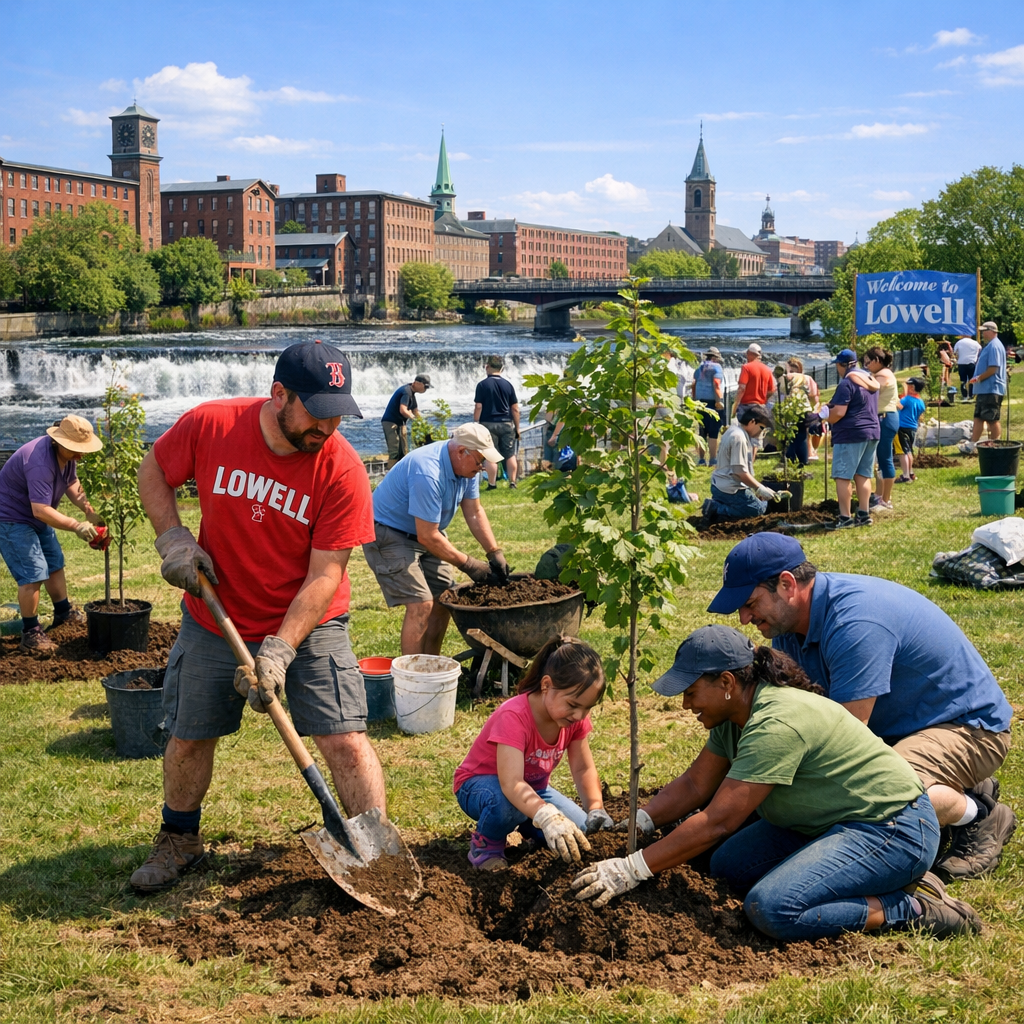
Lowell, Massachusetts, is proactively addressing environmental challenges through a combination of community-driven initiatives and strategic planning. As climate change continues to impact the region, the city is implementing projects aimed at enhancing biodiversity, improving climate resilience, and fostering community engagement.
Community-Led Environmental Projects
One notable initiative is the Centralville Habitat Interconnected Restoration Project (CHIRP). This project focuses on creating biodiversity “hotspots” in the Centralville neighborhood by constructing a pollinator meadow and a mini forest. These green spaces are designed to support wildlife, improve climate resilience, and provide residents with accessible natural areas. The pollinator meadow is located behind the Henry J. Robinson Middle School, while the mini forest is being developed on a nearby vacant parcel. Construction began in late spring 2026 and is expected to be completed by July 2026.
In addition to CHIRP, the Lowell Parks & Conservation Trust, in partnership with Mass Audubon’s Drumlin Farm Wildlife Sanctuary, offers the Lowell Leaders in Stewardship (LLIS) program. This after-school environmental education program engages students from elementary to high school in STEM-based activities that connect them to nature and their community. LLIS aims to inspire positive change by fostering a sense of stewardship among young residents.
Climate Change Impacts and Risks
Climate change poses significant risks to Lowell, including increased precipitation, heat, and flooding. According to ClimateCheck, the city faces extreme precipitation risk and high heat risk. Projections indicate that by 2050, residents may experience an average of about 31 days per year with temperatures exceeding 91.5ºF, compared to approximately 7 such days around 1990. Additionally, about 18% of buildings in Lowell are at risk of flooding, with an average 39% chance of experiencing a flood about 1.6 feet deep over 30 years.
These climate hazards can impact local infrastructure, public services, and natural resources. The city recognizes the importance of addressing these challenges to protect the health and well-being of its residents.
City’s Commitment to Environmental Management
The Lowell Regional Wastewater Utility (LRWWU) operates an ISO 14001:2015 certified wastewater treatment facility, demonstrating the city’s commitment to environmental management. The Environmental Management System (EMS) provides a framework for reducing waste generation, lowering energy consumption, and continually improving responses to environmental concerns. The city undergoes annual evaluations to maintain this certification, ensuring ongoing adherence to environmental standards.
Community Engagement and Education
Community engagement is a cornerstone of Lowell’s environmental efforts. The Environmental TREEs Club at Lowell High School offers students opportunities to learn about local flora and fauna, participate in community service projects, and take action to improve the environment. Partnering with organizations like the Massachusetts Audubon Society and the Lowell Parks and Conservation Trust, the club provides quality programming, including visits from wildlife, to inspire students to become environmental stewards.
Through these initiatives and a strong commitment to environmental management, Lowell is actively working to enhance its resilience to climate change and foster a sustainable future for its residents.