

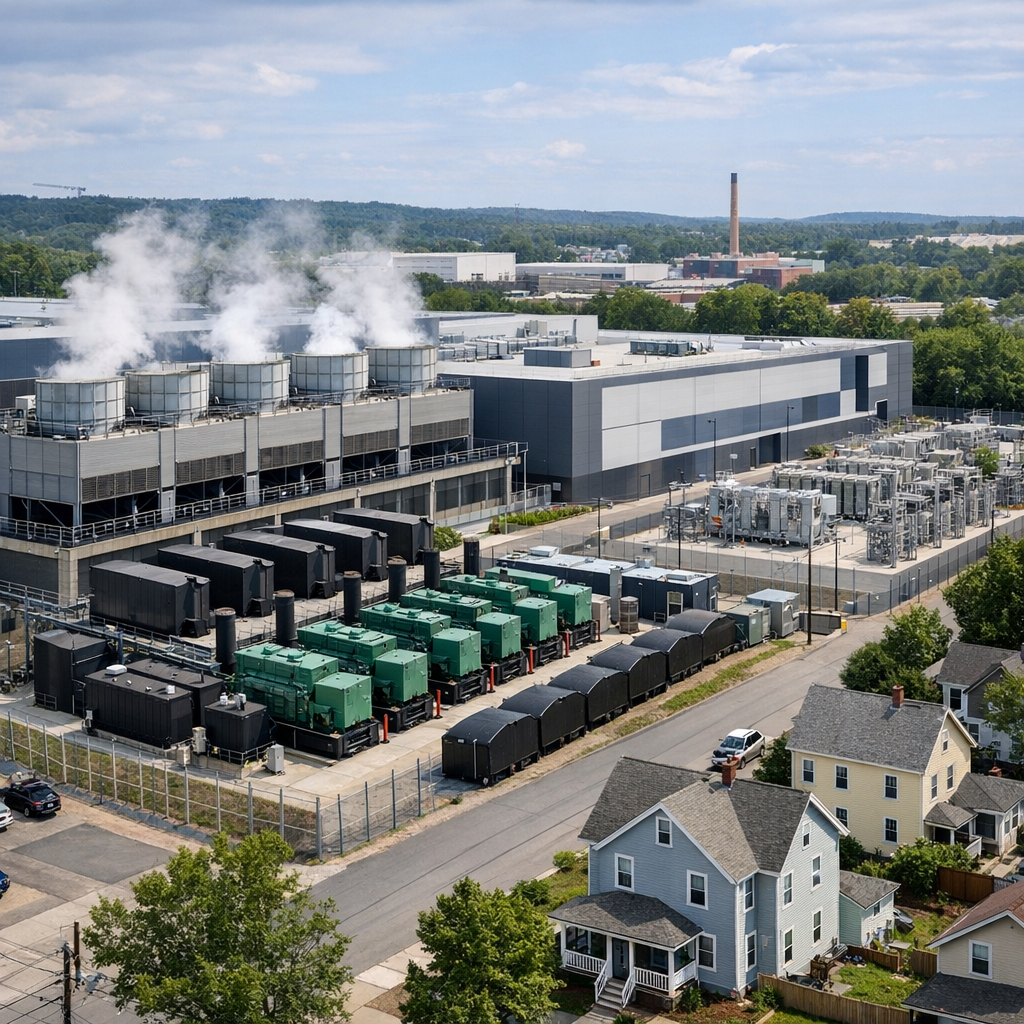
In the heart of Lowell, Massachusetts, a debate is unfolding that encapsulates the challenges of modern urban development. The expansion of a 352,000-square-foot data center by the Markley Group has sparked significant concern among local residents, leading to a lawsuit that questions the balance between technological progress and community well-being.
The Core of the Controversy
Residents from the Sacred Heart and Back Central neighborhoods have filed a lawsuit against the Massachusetts Department of Environmental Protection (MassDEP) and the Markley Group. They allege that the data center’s growth has disrupted their daily lives, citing issues such as noise pollution from diesel generators, mist from cooling towers settling on properties, and surveillance cameras monitoring surrounding streets and backyards. The lawsuit challenges the approval process of the facility’s air quality permit and the administrative consent order that allowed construction to proceed during an ongoing appeal.
Community Voices
Mary Wambui, a Lowell resident since 2002, became involved after learning about plans to add more diesel generators to the data center. She expressed concerns about the lack of transparency and the impact on the community. Another resident, Jacob Fortes, lives near the facility and has experienced fumes from the diesel engines entering his home, calling it a “nightmare situation.” These personal accounts highlight the community’s struggle to have their voices heard in the face of rapid technological expansion.
Broader Implications
This situation in Lowell is not isolated. Across Massachusetts, cities like Everett are also grappling with the implications of data center developments. The rise of cloud computing and artificial intelligence has increased demand for these facilities, which require substantial resources and are often situated near residential areas. The Lowell case could set a precedent for how communities and regulatory bodies address the challenges posed by such developments.
Looking Ahead
As the lawsuit progresses, it underscores the need for a balanced approach to urban development—one that considers both technological advancement and the quality of life for residents. The outcome may influence how future projects are evaluated and approved, ensuring that community voices are integral to the decision-making process.